Introduction to the topic of heat pumps and how they work
You've probably wondered what exactly a heat pump is and how it works, right? A heat pump is a clever device that absorbs heat from the environment and raises it to a higher temperature level. That sounds pretty cool, doesn't it? But how do you measure the efficiency of a heat pump? This is where the seasonal performance factor comes into play. This figure shows how efficiently the heat pump works over the course of a year. A high seasonal performance factor means that the pump works efficiently, while a low figure indicates that the pump consumes more energy than it generates. So, the higher the seasonal performance factor, the better!
The seasonal performance factor of a heat pump indicates how efficiently it works over the course of a year. It is calculated from the ratio of heat supplied to the drive energy used. So, the higher this figure, the more efficiently your heat pump works and the more energy and costs you save!
Definition of the seasonal performance factor and why it is important
The annual coefficient of performance (COP) is a dimensionless key figure that indicates the efficiency of a heat pump over the course of a year. It is defined as the ratio of the heating energy delivered over the year to the electrical energy consumed. The seasonal performance factor is the most important indicator for selecting a heat pump, as it has a direct influence on the costs of operation. The higher the seasonal performance factor, the more efficient the heat pump and the lower the electricity costs.
The seasonal performance factor is measured under real conditions, i.e. taking into account the fluctuating temperatures over the course of the year. This means that the seasonal performance factor is a more realistic indication of the efficiency of a heat pump than other key figures that are measured under laboratory conditions.
Various factors influence the seasonal performance factor, including
- The type of heat source: Air source heat pumps generally have a lower seasonal performance factor than ground source heat pumps or groundwater heat pumps.
- The flow temperature: The lower the flow temperature, the higher the seasonal performance factor.
- The usage behavior: An efficient heating system and conscious use of the heat pump can improve the seasonal performance factor.
The minimum annual coefficient of performance for heat pumps that are subsidized in Germany is 3.5. In practice, annual coefficients of performance of up to 5.5 can be achieved.
The seasonal performance factor is an important indicator when selecting a heat pump. It should be taken into account when deciding for or against a heat pump.
Explanation of how the seasonal performance factor is calculated
The seasonal performance factor (SPF) is measured under real conditions, i.e. taking into account the fluctuating temperatures over the course of the year. This means that the seasonal performance factor is a more realistic indication of the efficiency of a heat pump than other key figures measured under laboratory conditions.
The JAZ is calculated in two steps:
- Determining the heating energy: The heating energy is measured over a period of one year. For this purpose, a heat meter is connected to the heating circuit of the heat pump. The heat meter measures the flow rate and temperature of the heating water and uses this to calculate the amount of heat.
- Determining electricity consumption: Electricity consumption is also measured over a period of one year. An electricity meter is connected to the heat pump for this purpose. The electricity meter measures the electricity consumption of the heat pump.
The annual coefficient of performance is then calculated from the quotient of heating energy and electricity consumption:
JAZ = Qab / Qzu
- Qab: Heat energy emitted (in kWh)
- Qzu: Electrical energy supplied (in kWh)
Example:
The heating energy of a heat pump is 16,000 kWh per year. The electricity consumption of the heat pump is 4,000 kWh per year. The annual coefficient of performance of the heat pump is then:
JAZ = 16,000 kWh / 4,000 kWh = 4.0
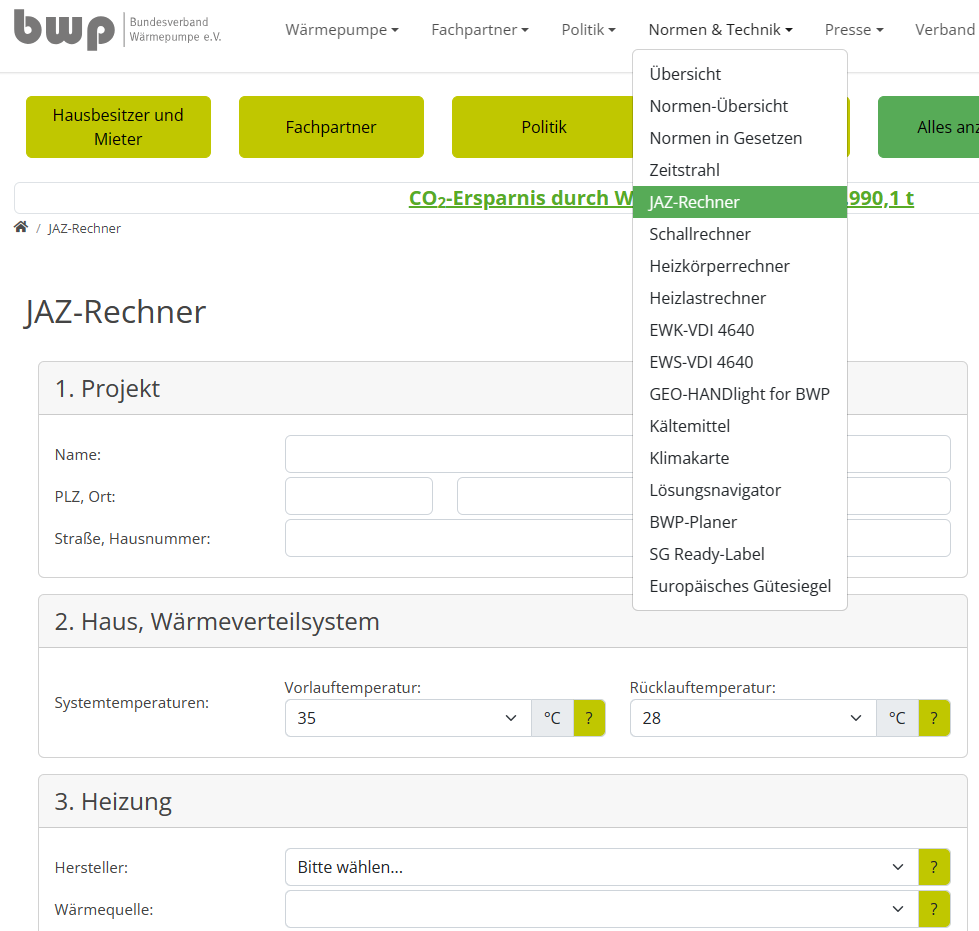
Factors influencing the seasonal performance factor of a heat pump
The annual coefficient of performance (COP) of a heat pump is an important key figure that indicates the efficiency of the heat pump over the course of a year. It is defined as the ratio of the heating energy emitted over the year to the electrical energy consumed.
The seasonal performance factor is influenced by various factors, including
- The type of heat source: Air source heat pumps generally have a lower seasonal performance factor than ground source heat pumps or groundwater heat pumps.
- The flow temperature: The lower the flow temperature, the higher the seasonal performance factor.
- The usage behavior: An efficient heating system and conscious use of the heat pump can improve the seasonal performance factor.
Type of heat source
The type of heat source has the greatest influence on the seasonal performance factor of a heat pump. Air source heat pumps use the outside air as a heat source. In winter, however, the outside air is relatively cold, so the heat pump has to consume more electricity to reach the desired flow temperature. Geothermal heat pumps and groundwater heat pumps, on the other hand, use an underground heat source that has a higher temperature all year round. As a result, they can achieve the desired flow temperature with a lower amount of electricity and thus achieve a higher seasonal performance factor.
Flow temperature
The flow temperature is the temperature of the heating water that flows through the radiators or panel heating systems. The higher the flow temperature, the more electricity the heat pump has to consume to reach it. It therefore makes sense to keep the flow temperature as low as possible. In practice, flow temperatures of 35 to 45 degrees Celsius are recommended.
Usage behavior
User behavior can also influence the seasonal performance factor of a heat pump. An efficient heating system and conscious use of the heat pump can improve the seasonal performance factor.
Efficient heating system
An efficient heating system ensures that the heat pump can reach the desired room temperature with minimum power consumption. This includes, among other things:
- A well-insulated building envelope
- An efficient heating system
- A hydraulically balanced heating system
Conscious use of the heat pump
Conscious use of the heat pump can also help to improve the seasonal performance factor. This includes, among other things:
- Regular maintenance and cleaning of the heat pump
- Avoiding unnecessary heat loss, e.g. through closed windows and doors
- The use of the heat pump also for hot water preparation
The annual coefficient of performance of a heat pump can be significantly improved by taking these factors into account.
Significance of the seasonal performance factor for the efficiency and cost-effectiveness of a heat pump
The seasonal performance factor of a heat pump is a key factor for efficiency and cost-effectiveness. It shows how much usable heat a heat pump generates on average over the year in relation to the energy used. A high seasonal performance factor means that the heat pump works efficiently and is therefore cost-saving. It is therefore important to pay attention to the seasonal performance factor when buying a heat pump. But bear in mind that this figure can vary depending on the operating conditions and type of heat pump. An annual coefficient of performance of 3 or more is ideal, which means that the heat pump generates three times more heat than it consumes electricity.
The seasonal performance factor of a heat pump therefore describes the ratio of heat output to energy input. The efficiency of the heat pump is better with a higher seasonal performance factor.

Comparison of the seasonal performance factors of different types of heat pumps
The seasonal performance factor (SPF) is a key parameter for evaluating the efficiency of different types of heat pumps. The seasonal performance factor indicates how much heat a heat pump supplies in relation to its energy consumption over the entire year. Here are the seasonal performance factors for different types of heat pumps:
- Air-to-water heat pumps: Air-to-water heat pumps use the outside air as a heat source. Due to the comparatively low temperatures of the outside air in winter, the annual coefficient of performance for air heat pumps is in the lower range. Nevertheless, they can work efficiently in temperate climates and are often a cost-effective option.
- Brine-to-water heat pumps: Ground source heat pumps, on the other hand, use the constant temperature of the ground as a heat source. As the ground temperature is below the frost line, ground source heat pumps can work more efficiently, especially in regions with harsh winter conditions. The higher annual coefficient of performance reflects the constant availability of geothermal heat.
The differences in the seasonal performance factors can be explained by the temperature differences between the respective heat sources. While air source heat pumps are influenced by seasonal fluctuations in the outside temperature, ground source heat pumps and groundwater heat pumps benefit from a more constant and warmer source, which increases their efficiency.
When selecting a type of heat pump, it is important to consider the climatic conditions of the region in order to achieve optimum efficiency and performance. The environmental compatibility and energy efficiency factor makes heat pumps a sustainable option for heating buildings.
COP, SCOP and JAZ: what are the differences?
COP (coefficient of performance), SCOP (seasonal coefficient of performance) and JAZ (seasonal performance factor) are all key figures that quantify the efficiency of heat pumps. Here are the differences between these terms:
- COP (Coefficient of Performance): The COP is the ratio between the heat output and the electrical power input at a specific point in time. It is a snapshot and does not take into account seasonal fluctuations or different operating conditions.
- SCOP (Seasonal Coefficient of Performance): The SCOP is an extended version of the COP that takes seasonal fluctuations into account. The SCOP takes into account the entire operating period of a heat pump over a heating season and includes factors such as different outside temperatures, partial load operation and other seasonal variables. It gives a more realistic assessment of the efficiency of a heat pump over a longer period of time.
- SPF (seasonal performance factor): The seasonal performance factor is essentially equivalent to the SCOP and is often used synonymously. Like the SCOP, the seasonal performance factor considers the performance of a heat pump over a longer period of time, usually over a year. It takes into account seasonal fluctuations and different operating conditions to enable a more comprehensive assessment of efficiency.
In practice, these terms are often used interchangeably, especially when it comes to the efficiency of heat pumps. The focus is on evaluating the performance of the heat pump under real conditions over a longer period of time in order to obtain accurate information about its efficiency. Therefore, the SCOP and the JAZ are often more meaningful in the context of heat pumps than the simple COP.
.png)
Tips for optimizing the seasonal performance factor and saving energy
Optimizing the seasonal performance factor (SPF) and saving energy with heat pumps can help to increase the efficiency of the system and reduce operating costs. Here are some tips:
- Correct dimensioning: Make sure that the heat pump is correctly dimensioned. Oversizing can lead to inefficient operation, while undersizing can lead to frequent switching on and off and therefore higher energy consumption.
- Good insulation: A well-insulated building envelope minimizes heat loss and enables the heat pump to work more efficiently. You should therefore invest in high-quality insulation for the roof, walls and windows.
- Low flow temperatures: Reduce the flow temperatures if possible. Lower temperatures improve the efficiency of the heat pump, especially with air source heat pumps.
- Optimum settings: Adapt the heat pump settings to the respective conditions. Modern heat pumps often have different operating modes that can be adapted to the current requirements.
- Regular maintenance: Carry out regular maintenance work to ensure that the heat pump is working optimally. This includes checking refrigerant levels, cleaning filters and inspecting the entire system.
- Use of solar thermal energy: Integrate solar thermal energy into your heating system to reduce the load on the heat pump when providing hot water. This can further improve the annual coefficient of performance.
- Thermostats and control technology: Install programmable thermostats and intelligent control technology to optimize energy consumption. This allows you to adapt the heating to your personal needs and avoid unnecessary heating.
- Consideration of outdoor conditions: Follow the weather forecast and adjust the heat pump settings accordingly. This can minimize the influence of outside temperature fluctuations, especially with air source heat pumps.
- Optimize ground or air collectors: With ground source heat pumps, optimized ground collectors or efficient use of air collectors can increase efficiency.
- Conscious energy consumption: Sensitize the occupants of the building to conscious energy consumption. Using heat sparingly helps to reduce energy consumption.
By following these tips, you can not only optimize the seasonal performance factor of your heat pump, but also reduce your energy costs in the long term.