.png)
Overview of brine-to-water heat pumps (geothermal heat pumps)
Advantages of a brine-to-water heat pump
Efficiency: High efficiency in heat conversion through the use of geothermal energy.
Low operating costs: Reduced operating costs due to the constant temperature of the geothermal energy.
Environmentally friendly: Low CO2 emissions as the heat source is renewable.
Versatility: Suitable for heating and hot water preparation in residential and commercial buildings.
Difference to other heat pumps
Heat source: Uses geothermal heat (brine) as the primary heat source as opposed to air or water.
Stability: More constant temperature of the geothermal energy compared to the air, which leads to higher efficiency.
Greater installation depth: Requires a deep borehole or surface collectors for brine intake.
How does a brine-to-water heat pump work?
Brine-to-water heat pump: Heating with heat from geothermal energy
The brine-to-water heat pump offers a sustainable and efficient solution for supplying heat to buildings by using natural geothermal energy as a renewable energy source.
.png)
- Heat absorption from the ground: The heat pump begins its cycle in the ground collector, a system of pipes laid underground. A brine solution, usually a mixture of water and antifreeze, circulates through these pipes and absorbs the geothermal heat.
- Evaporation: The heated brine is fed to the heat pump's evaporator. Here it transfers its heat to the refrigerant, which evaporates at lower temperatures than water. The refrigerant heats up and evaporates.
- Compression: The vaporized refrigerant vapour is then pumped into the compressor. Compression increases the pressure and the temperature of the refrigerant rises further.
- Heat release: The hot refrigerant now enters the condenser. Here, the refrigerant transfers its heat to the building's heating system, e.g. to the underfloor heating or radiators. In the process, the refrigerant condenses and becomes liquid again.
- Pressure reduction and start of cycle: After the refrigerant has released its heat, it passes through the expansion valve. Here, the pressure of the refrigerant is reduced, which leads to cooling. The cooled refrigerant flows back to the evaporator to absorb heat from the brine again. The cycle starts all over again.
How the brine-to-water heat pump works
The brine-to-water heat pump is an innovative technology that uses the potential of geothermal energy to generate heat and heat buildings efficiently. This method represents a sustainable and environmentally friendly alternative to conventional heating systems, as it is based on renewable energy and at the same time helps to reduce CO2 emissions.
The operating principle of this heat pump is based on the natural temperature difference between the earth's surface and its interior. As a rule, a liquid mixture, a so-called brine, is fed into the ground through geothermal probes or surface collectors, where it absorbs the geothermal heat present there. The brine then transports this heat to the heat pump. The heat is transferred from the geothermal energy to a refrigerant through a heat exchanger, the ground collector or geothermal probe. The refrigerant is compressed in the heat pump and heats up in the process. The vaporized refrigerant is compressed in a compressor. This increases the pressure and temperature of the refrigerant. The hot refrigerant transfers the heat to the water, which is then heated.
There, the heat pump increases the temperature of the absorbed energy in order to make it usable for heating or hot water preparation. This process requires comparatively little energy, as the heat pump merely raises the extracted geothermal energy to a higher temperature level.
Geothermal heat pumps are an environmentally friendly and energy-efficient way of heating. Compared to conventional heating systems such as gas or oil heating, they consume significantly less electricity. The maximum heat output of a geothermal heat pump depends on the temperature of the ground. In Germany, the average temperature of the ground at a depth of 100 meters is around 11 to 12 degrees Celsius. This is sufficient to heat buildings in winter with a heat output of up to 10 kW.
How much does a brine-to-water heat pump cost?
What costs can I expect when buying a brine-to-water heat pump?
The costs for a brine-to-water heat pump are made up of the following components:
- Purchasing the heat pump: The cost of the heat pump itself varies depending on the output and manufacturer. For a detached house, they can be between 10,000 and 15,000 euros.
- Ground collector or geothermal probes: The cost of the ground collector or geothermal probes depends on the length required, the type of soil and the local conditions. For a typical detached house, these costs can be between 10,000 and 20,000 euros.
- Installation and assembly: The installation costs include the assembly of the heat pump, the laying of the ground collectors or geothermal probes and the integration into the existing heating system. These costs can amount to between 3,000 and 5,000 euros.
- Additional components: Costs for additional components such as buffer storage tanks, control technology or adaptations to the heating system can range between 1,000 and 3,000 euros.
- Planning and advice: Additional costs may be incurred for planning and advice from specialists, which vary between 1,000 and 2,500 euros.
- Operating costs: While the operating costs are comparatively low, they should still be taken into account. This includes electricity costs for operating the heat pump.
Acquisition costs of a geothermal heat pump
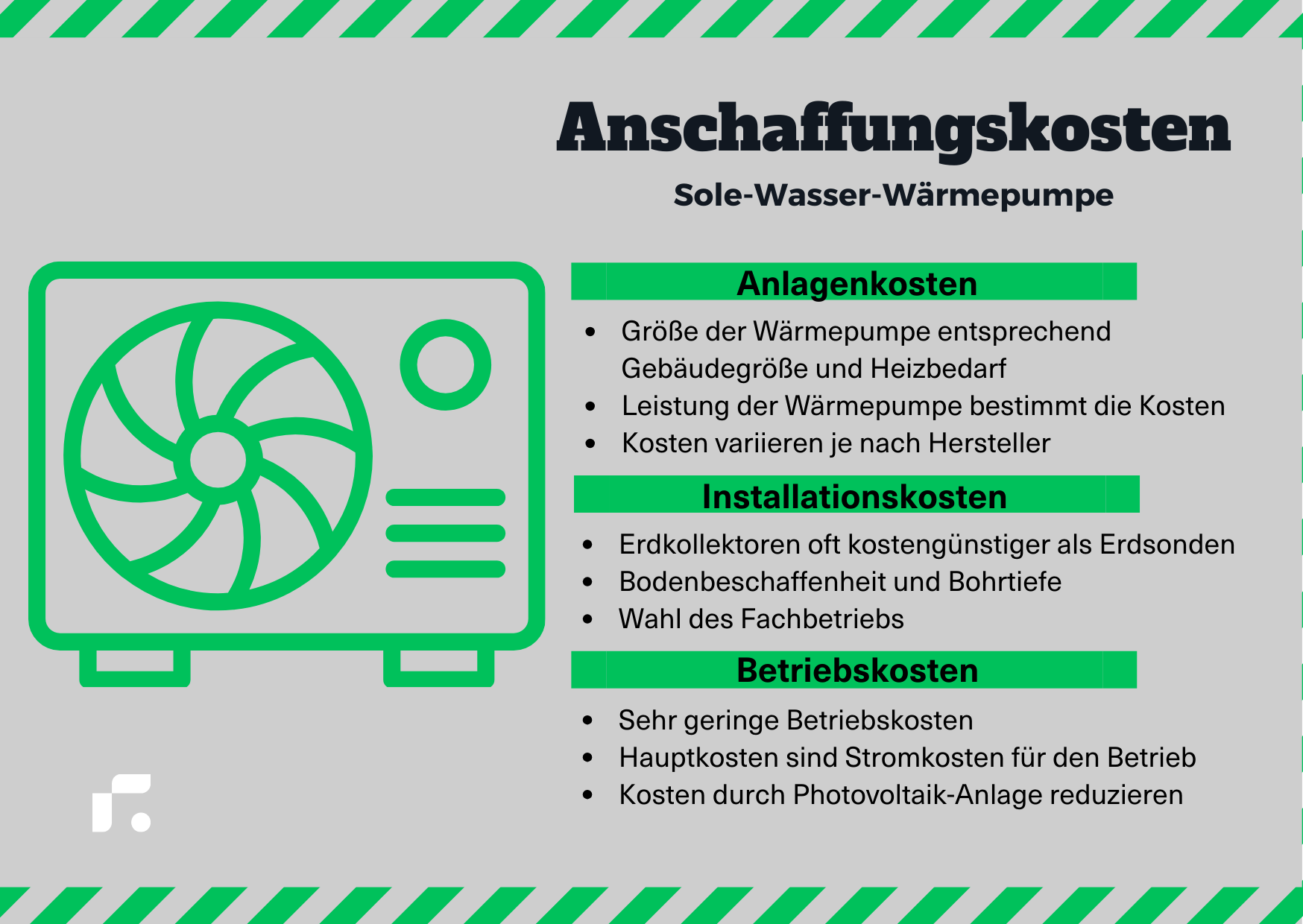
The purchase costs for a geothermal heat pump depend on various factors.
Size of the heat pump: The size of the heat pump depends on the size of the building and the heating requirement.
Heat pump output: The output of the heat pump determines how much heat it can generate.
Manufacturer: The purchase costs vary depending on the manufacturer.
Installation costs of a geothermal heat pump
The installation costs for a geothermal heat pump depend on various factors:
Type of heat pump: The installation costs for ground collectors are generally lower than the installation costs for geothermal probes.
Local conditions: The installation costs may vary depending on the ground conditions and the depth of the boreholes.
Specialist company: The installation costs may vary depending on the specialist company.
Operating costs of a geothermal heat pump
The operating costs of a geothermal heat pump are very low. They essentially consist of the electricity costs for operating the heat pump.
The electricity costs for a geothermal heat pump are usually between 700 and 900 euros per year. These costs can be reduced by using green electricity or your own photovoltaic system.
If the electricity consumption of the heat pump is covered by a photovoltaic system, there are no electricity costs.
How much does a brine-to-water heat pump for a detached house cost?
In general, the total cost of a brine-to-water heat pump for a single-family home can range from around €10,000 to €25,000. This price range includes the cost of the heat pump itself, the installation and, if necessary, the construction of geothermal probes or surface collectors. The biggest cost driver is the size of the detached house. The larger the building to be heated, the more powerful and larger the heat pump needs to be, which has an impact on the costs.
How high are the operating costs for a brine-to-water heat pump?
The operating costs for a brine-to-water heat pump depend on various factors:
Heat requirement of the building
Season - outside temperature
The heat requirement of the building is the most important influencing factor. The greater the heat requirement, the higher the electricity consumption of the heat pump.
- The heat pump's SPF is also an important influencing factor. The SPF indicates the ratio between the heat output and the electrical energy supplied over a one-year period. In other words, the SPF indicates the efficiency of the heat pump over a longer period of time. The higher the SPF, the more efficient the heat pump and the lower the electricity consumption.
- The time of year and the outside temperature also have an influence on the heat pump's electricity consumption. Electricity consumption is higher in the cold season than in the warm season.
- Most of the operating costs are attributable to the electricity consumption of the heat pump. Any deviations in the figures could be due to different heating requirements or specific systems.
- The remaining operating costs arise from the maintenance and inspection of the heat pump. The maintenance costs are usually around 100 euros per year.
- The operating costs of a brine-to-water heat pump can be reduced even further by combining it with a photovoltaic system. If the photovoltaic system covers the heat pump's electricity requirements, there are no electricity costs.
Sample calculation of electricity consumption for brine-to-water heat pumps
The power consumption of a brine-to-water heat pump is calculated using a simple formula:
Power consumption = (heat output / JAZ) x operating hours
Sample calculation of electricity consumption
Assuming the air-to-water heat pump with an output of 16 kilowatts and an annual coefficient of performance (COP) of 5.33 runs for 1,800 hours per year. This corresponds to an electricity consumption of 5,000 kilowatt hours (kWh) per year.
Power consumption = (16 kW / 5.33) x 1.800 h = 5,403 kWh
To determine the annual electricity costs for the system, system owners can multiply the electricity consumption by the price per kilowatt hour (kWh):
Electricity costs of the heat pump = electricity consumption x costs per kWh
Electricity costs of the heat pump = 5,403 kWh x 0.28 Euro/kWh = 1.513 Euro
What are the advantages of a brine-to-water heat pump over a gas or oil heating system?
A brine-to-water heat pump offers several advantages over a gas or oil heating system, which are both ecological and economical:
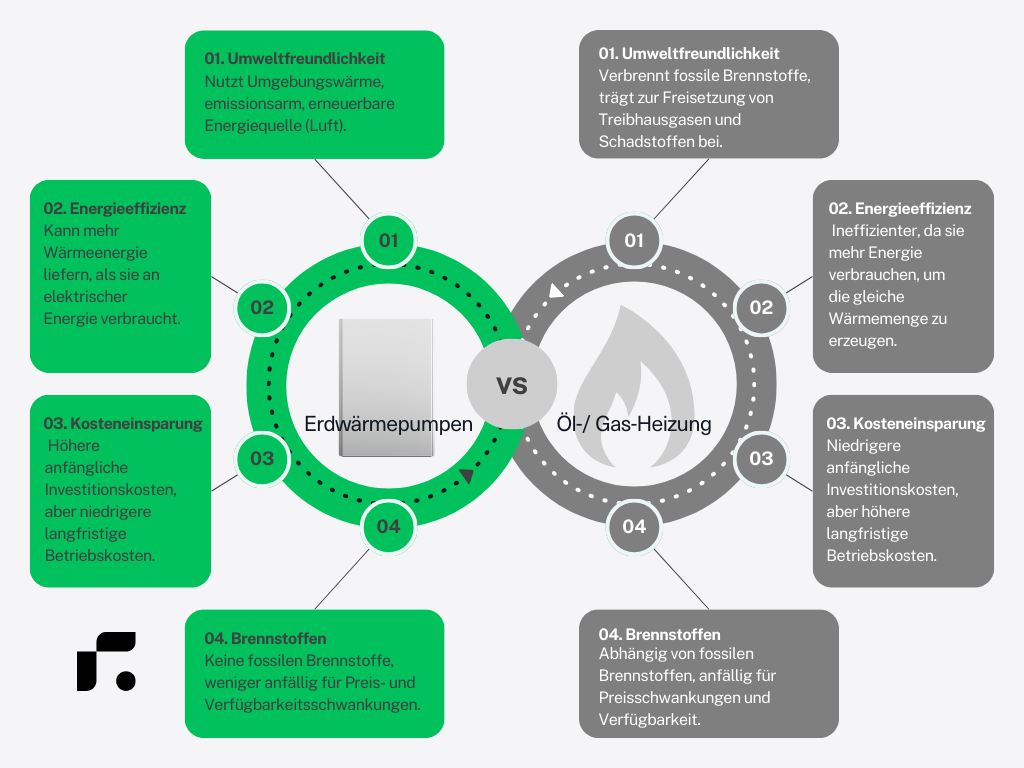
- Environmentally friendly: The biggest advantage lies in its environmental friendliness. A brine-to-water heat pump utilizes the natural energy of the earth by using geothermal energy as a heat source. In contrast, gas and oil heating systems burn fossil fuels, resulting in harmful emissions such as CO2 and other pollutants. Using renewable energy sources helps to reduce greenhouse gas emissions and improve air quality.
- Energy efficiency: Heat pumps use existing environmental energy and require little external energy to raise it to a higher temperature level. In comparison, gas or oil heating systems are less efficient as they burn primary fuels to generate heat. Brine-to-water heat pumps can therefore generally have a higher efficiency and lower operating costs.
- Long-term cost savings: Although the initial installation costs of a brine-to-water heat pump may be higher than those of a gas or oil heating system, long-term savings can be achieved. Through the use of free environmental energy and lower operating costs, the investment can pay for itself over the lifetime of the system.
- Versatility: Brine-to-water heat pumps can be used not only for heating, but also for cooling buildings. Using a reverse process, they can extract heat from the interior in summer and thus ensure a more comfortable room temperature.
- Independence from fossil fuels: As heat pumps are based on renewable energies, they reduce dependence on finite resources such as gas or oil. This can ensure a more stable energy supply in the long term.
However, it is important to note that the choice of heating system depends on various factors such as individual needs, building structure, cost and the availability and cost of energy sources. Nevertheless, brine-to-water heat pumps generally offer a sustainable and efficient alternative to conventional gas or oil heating systems and can help to reduce the environmental impact.
Costs geothermal heat pump vs. oil heating
The operating costs of a brine-to-water heat pump are significantly lower than the operating costs of a conventional heating system using fossil fuels. A detached house with a conventional heating system using oil generally consumes around 2,500 liters of oil per year. At an oil price of 1.50 euros per liter, this results in fuel costs of around 3,750 euros per year.
What are the requirements for using a brine-to-water heat pump?
Several prerequisites are necessary for the use of a brine-to-water heat pump in order to ensure efficient and reliable operation:
- Availability of outdoor space: The installation of a brine-to-water heat pump requires outdoor space for geothermal probes or surface collectors. The size of the required area depends on the size of the building to be heated and the specific requirements of the system.
- Suitable soil conditions: Geological conditions such as soil type and layers must be taken into account for geothermal probes. A soil survey may be required to determine the suitability of the site for the installation of the geothermal probes.
- Planning and approvals: In many cases, installing a brine-to-water heat pump requires thorough planning and permits from local authorities or building departments. This may vary depending on the region or local building regulations.
- Sufficient space in the building: The heat pump itself requires space inside the building. There should be enough space to install the heat pump unit and other necessary components such as the buffer tank.
- Insulation of the building: Good building insulation is important to minimize heat loss and maximize the efficiency of the heat pump. A well-insulated building leads to less heat loss and increases the efficiency of the heat pump.
- Power supply: A reliable power supply is essential, as brine-to-water heat pumps require electrical energy to absorb and compress the geothermal energy.
- Professional installation and maintenance: Installing a brine-to-water heat pump requires specialist knowledge and experience. It is important that the installation is carried out by qualified professionals. In addition, regular maintenance is crucial to ensure optimum performance and longevity of the system.
Before deciding to install a brine-to-water heat pump, it is advisable to seek comprehensive advice from professionals to assess the suitability of the site, the feasibility of the system and potential costs.
My house has radiators, does it still make sense to install a heat pump?
Installing a heat pump can also make sense in a house with radiators. Although radiators are usually connected to central heating systems such as gas or oil heating systems, they can also be operated efficiently with a heat pump. Here are a few points to consider:
- Heat distribution: Heat pumps generate heat with lower flow temperatures compared to conventional gas or oil heating systems. This may mean that the existing radiators may need to be adapted or replaced in order to work efficiently with the lower flow temperature of the heat pump. There are special low-temperature radiators that are optimized for operation with heat pumps.
- Efficiency gains: Heat pumps achieve their best efficiency at lower flow temperatures. If the house is well insulated and the radiators can be adjusted accordingly, the heat pump can work efficiently and potentially lead to savings on heating costs.
- Environmentally friendly: Using a heat pump based on renewable energy helps to reduce CO2 emissions and protect the environment. Even if existing radiators continue to be used, switching to a heat pump can significantly reduce the ecological footprint of the heating system.
- Cooling options: Heat pumps often offer the option of active cooling in summer. By operating in reverse, the heat pump can draw heat from the house and ensure a comfortable room temperature. This could be an attractive additional function, especially in warmer regions.
However, before you decide to install a heat pump in a house with radiators, it is important to get thorough advice from professionals. They can assess the suitability of the existing heating system for operation with a heat pump and make recommendations for possible adjustments or optimizations to get the best performance from the system.

Can I also install a brine-to-water heat pump in an old building?
In principle, it is also possible to install a brine-to-water heat pump in an old building. However, there are some important aspects to consider:
- Building insulation : In older buildings, the insulation may not be as efficient as in newer buildings. However, good building insulation is crucial to minimize heat loss and maximize the efficiency of a heat pump. It may be necessary to carry out additional insulation measures to reduce energy loss.
- Heating system adaptations: In an old building with an existing heating system (e.g. radiators), the heating system may need to be adapted or optimized in order to work efficiently with the lower flow temperatures of a heat pump. Special low-temperature radiators may need to be installed.
- Space for geothermal probes or surface collectors: The installation of a brine-to-water heat pump requires space outside for geothermal probes or surface collectors. In an old building, adjustments may be necessary to create enough space for these elements.
- Building permits and regulations: It is important to check local building regulations and approval procedures before installing a heat pump in an old building. In some cases, certain conditions or permits may be required.
- Professional advice: Before installing a heat pump in an old building, it is advisable to obtain thorough advice from specialists. Experts can assess the condition of the building, check the suitability of the location for the installation of the geothermal probes or surface collectors and make recommendations for possible adaptations or optimizations.
Although installing a brine-to-water heat pump in an old building can present some challenges, it is often possible to create an efficient and environmentally friendly heating solution with appropriate adaptations and planning. However, careful planning and professional advice are essential to achieve the best results.
How long does it take to install a brine-to-water heat pump?
The time it takes to install a brine-to-water heat pump can vary depending on a number of factors, including the size of the building, the specific requirements of the system, the type of geothermal energy used (geothermal probes or surface collectors) and the complexity of the project. However, some rough timeframes can usually be given:
- Preparation and planning phase: This phase can take several weeks to months, depending on the approval time, the planning of the installation and the procurement of the necessary permits.
- Installation of the geothermal probes or surface collectors: The installation of these elements can take several days to a few weeks, depending on the type of system and the conditions of the site. This may also include ground preparation and the drilling of probes.
- Installation of the heat pump unit: The installation of the actual heat pump unit in the building can take several days, depending on the complexity of the system, the adjustments to the heating system and the connection to the geothermal probes or surface collectors.
- Final work and tests: After installation, various tests must be carried out to ensure that the system is working properly. This can take additional time and may require further adjustments.
Overall, the installation of a brine-to-water heat pump can take anywhere from a few weeks to several months, depending on the factors mentioned and the size of the project. It is important that the installation is carried out by qualified professionals to ensure proper installation and optimal performance of the system. Thorough planning and coordination between the various parties involved are crucial to minimize installation time and ensure an efficient system.
What should you consider when buying a brine-to-water heat pump?
When buying a brine-to-water heat pump, there are several important points to consider to ensure you choose the right system for your needs:
Energy efficiency and performance: Pay attention to the energy efficiency class of the heat pump. Higher efficiency means lower operating costs. Also check the performance of the heat pump to ensure that it is sufficiently dimensioned for the heating and cooling needs of your home.
Quality and reliability: Choose a heat pump from a reputable manufacturer with a good reputation for quality and reliability. Also check the warranty conditions to make sure you are adequately covered.
Type of geothermal heat utilization: Decide between geothermal probes or surface collectors as the heat source for the heat pump. The choice depends on the geological conditions of your location and the installation options. A specialist can help you determine the best option for your property.
Installation and space requirements: Consider the space requirements for the heat pump indoors and for geothermal probes or surface collectors outdoors. Ensure that there is sufficient space and that the installation can be carried out accordingly.
Noise level: Find out about the noise level of the heat pump during operation, especially if it is installed near residential areas. Some models are quieter than others and may be more suitable for residential areas.
Costs and subsidies: Compare the costs of different models and check possible government subsidy programs or grants that could support the purchase and installation of a heat pump.
Professional advice: Get quotes and advice from experienced professionals. Professional advice can help you find the most suitable system for your specific requirements and ensure that the installation is carried out properly.
By considering these points and researching carefully, you can make an informed decision and choose a brine-to-water heat pump that meets both your heating and cooling needs while being energy efficient and reliable.
Advantages and disadvantages of a brine-to-water heat pump
A brine-to-water heat pump has various advantages and disadvantages that need to be considered.
Advantages of the brine-to-water heat pump
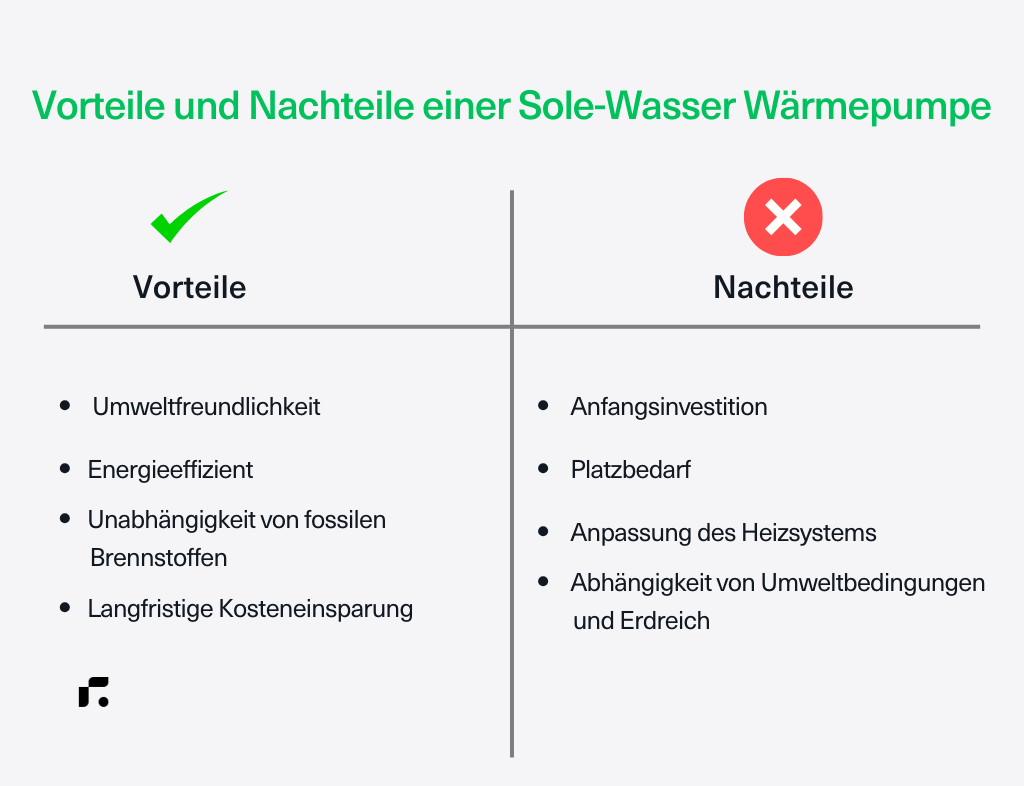
- Environmentally friendly: Brine-to-water heat pumps use renewable energy sources such as geothermal energy, which results in lower CO2 emissions compared to fossil fuels. Your CO2 emissions are reduced by up to 70%. They contribute to reducing the environmental impact and ecological footprint.
- Energy efficiency: They can absorb heat from the ambient air or the ground and raise it to a higher temperature level. They therefore achieve greater efficiency compared to conventional heating systems by supplying more energy than is required for their operation. This can reduce your heating costs by up to 80%.
- Year-round use: They can not only heat, but also cool. In summer, they can cool the interior by dissipating heat from the building and transferring it to the ground.
- Independence from fossil fuels: Brine-to-water heat pumps reduce dependence on fossil fuels such as gas or oil as they are based on renewable energy sources.
- Long-term cost savings: Although initial installation costs may be higher, long-term savings in energy costs can help offset the investment over the life of the system.
Disadvantages of the brine-to-water heat pump
- Initial investment: The installation of a brine-to-water heat pump requires a significant initial investment, including the cost of the heat pump itself, the geothermal probes or surface collectors and the installation.
- Space requirements: The installation of geothermal probes or surface collectors requires sufficient outdoor space, which can be a challenge in some cases.
- Adaptation of the heating system: Existing heating systems, such as radiators, may need to be adapted or replaced in order to work efficiently with the lower flow temperature of the heat pump.
- Dependence on environmental conditions: The performance of a heat pump can be influenced by environmental conditions such as the temperature of the ground or the ambient air, which can lead to fluctuations in efficiency.
The choice of a brine-to-water heat pump depends on individual requirements, the building structure, local conditions and financial possibilities. Careful consideration of the pros and cons can help determine whether this type of heat pump is the right solution for your requirements.
Using brine-to-water heat pumps as an air conditioning system
Brine-to-water heat pumps can be used not only for heating, but also for cooling a building. The process by which heat pumps take heat from one place and transfer it to another can be reversed to generate cooling.
In summer, a brine-to-water heat pump works as an air conditioning system by absorbing heat from inside the building and dissipating it outside. The process consists of three main phases:
- Heat absorption: The heat pump extracts heat from the interior of the building by circulating the water through the heating system.
- Compression and dissipation of heat: The hot water is compressed by the heat pump and the heat is dissipated to the outside. This can be done using geothermal probes or surface collectors.
- Cooling the interior: The cooled water is then fed back into the building's heating system to lower the room temperature.
This reverse mode of operation allows the brine-to-water heat pump to act as an air conditioner in summer, making it a versatile solution all year round.
It is important to note that the efficiency of a heat pump as an air conditioning system depends on various factors such as the size of the room to be cooled, the outside temperature and other environmental conditions. Nevertheless, the possibility of active cooling offers an additional functionality of the heat pump that can improve living comfort in warm seasons.
Promotion of a brine-to-water heat pump
How much is the subsidy for a brine-to-water heat pump?
The subsidy for a brine-to-water heat pump depends on various factors:
Type of heat pump: The subsidy is higher for brine-to-water heat pumps than for air-to-water heat pumps.
Living space: The subsidy is higher for larger living spaces than for smaller living spaces.
Energy efficiency: The subsidy is higher for highly efficient heat pumps than for less efficient heat pumps.
Building type: The subsidy is higher for new buildings than for existing buildings.
As part of the federal subsidy for efficient buildings (BEG), there is a subsidy of up to 70 % of the eligible costs for brine-to-water heat pumps in existing buildings.
In addition, there may also be regional funding programs that offer funding for brine-to-water heat pumps.
To apply for funding, you must submit an application to KfW or the Federal Office of Economics and Export Control (BAFA).
Take advantage of our comprehensive all-in service for your BAFA or KFW subsidy application, provided in cooperation with our partner 42watt.

How do I apply for funding for a brine-to-water heat pump?
Various documents are required to apply for funding for the installation of a heat pump. These include:
- Proof of performance of the heat pump: A document confirming the performance and characteristics of the installed heat pump. This can be a copy of the purchase contract or invoice, for example.
- Building description or building application: Documents containing details of the building project and possibly the planned or approved installation of the heat pump.
- Energy certificate: Proof of the building's energy efficiency, which may be required when applying for funding.
The following additional documents are required for new construction projects:
- Building application documents: Documents proving the building application and the building permits for the new building.
- Energy certificate for the completed building: proof of the energy efficiency of the completed building.
The processing time for the grant application can take several weeks. Once the subsidy has been approved, you will receive the subsidy amount after the heat pump has been installed.
Tips for a successful application:
- Early planning: Start obtaining the necessary documents in good time to avoid delays.
- Advice from specialist companies: Experts can help you choose the right heat pump and submit an application.
- Observe the funding conditions: Find out about current funding conditions, as these may change.
We offer support and all the necessary information on BAFA funding to ensure a smooth application process. Use our all-in service for your funding application in cooperation with our partner 42watt.
Brine-to-water heat pump - all products at a glance
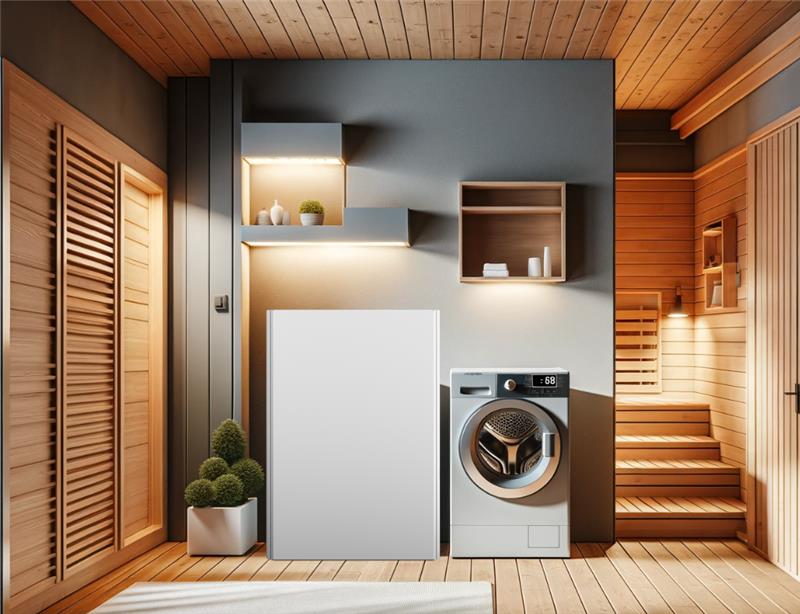
Experience maximum performance efficiency with the NovaAqua brine-to-water heat pump, with a minimum amount of propane refrigerant. This innovative heat pump uses stable and energy-rich geothermal energy all year round for a reliable supply of heating and domestic hot water. The focus is on consistency as well as energy and cost efficiency.
In addition, the NovaAqua offers maximum performance efficiency and is the most efficient propane heat pump in the modular output range from 4 to 16 kW. Its construction is designed for a service life of well over 25 years and ensures maximum repairability of all components. Thanks to the LTE module, the intelligent RCL software enables 24/7 performance monitoring and offers intelligent interfaces to photovoltaics and solar thermal energy.
How can a brine-to-water heat pump be financed?
A brine-to-water heat pump can be financed in various ways:
- Equity: The purchase costs for a brine-to-water heat pump can be financed with equity. If you have sufficient financial resources, you can make the investment from your own savings or other liquid funds.
- Credits and loans: Banks and financial institutions offer special credits or loans for the purchase and installation of energy-efficient heating systems such as a brine-to-water heat pump. These loans may be available at attractive conditions, low interest rates or state-subsidized loans. The Kreditanstalt für Wiederaufbau (KfW) in Germany, for example, grants low-interest loans for energy-efficient renovations, which also cover the installation of heat pumps.
- Funding programs and grants: Government agencies and energy agencies often offer financial incentives and grant programs for the installation of heat pumps. These incentives may include grants, allowances or tax benefits. It is worth looking for local, regional or national incentive programs that are available for the purchase and installation of a brine-to-water heat pump.
- Leasing or contracting: In some cases, energy supply companies or specialized service providers offer leasing or contracting models where the heat pump can be rented or used via a service contract. These options can be a way of reducing the initial investment costs, but the overall costs over the lifetime of the system could be higher.
We recommend our exclusive financing option: With an estimated installment payment of only €175 per month over a period of 120 months, an effective annual interest rate of 7.99% and a fixed borrowing rate of 7.71% (50% block rate), you can benefit from this attractive financing option. In addition, a down payment of 40%, which is refunded as a BAFA subsidy after commissioning, provides additional financial relief [financing example, depending on credit rating].
The most frequently asked questions about brine heat pumps
Which radiators for a brine-to-water heat pump?
Choosing the right radiators for a brine-to-water heat pump is important to ensure efficient and comfortable heat distribution. Brine-to-water heat pumps work with low flow temperatures. The radiators should therefore have a high heat output at low flow temperatures. In general, radiators with larger surface areas and lower temperatures are better suited for operation with a heat pump. Here are some options:
- Low-temperature radiators: Special radiators or panel radiators designed for operation with low flow temperatures are well suited to a brine-to-water heat pump. These radiators have a larger surface area, which enables better heat transfer, and they work efficiently even when the heating water is not so hot.
- Underfloor heating: Underfloor heating systems are ideal for operation with a brine-to-water heat pump. They distribute the heat evenly throughout the room and require lower flow temperatures in order to work effectively. Underfloor heating systems provide a pleasant indoor climate and are energy efficient.
- Wall heating: Similar to underfloor heating systems, wall heating systems work efficiently with low flow temperatures. They are a good alternative, especially if underfloor heating is not possible for structural reasons. Wall heating systems heat the walls, which results in a comfortable warmth in the room.
- Low-temperature radiators: Special radiators designed for use with heat pumps can also be an option. They are designed to work efficiently with lower flow temperatures and still emit a pleasant heat.
The choice of the best heating system depends on various factors, including the architectural features of the house, personal preferences, indoor climate requirements and the desired energy efficiency. It is advisable to seek professional advice in order to choose the most suitable heating system for a brine-to-water heat pump, taking into account the specific circumstances of your own home.

Is a brine-to-water heat pump more environmentally friendly than other heating systems?
The brine-to-water heat pump is one of the more environmentally friendly heating systems. Its environmentally friendly feature results from the use of free geothermal energy as the primary heat source. Using geothermal probes, surface collectors or groundwater wells, this heat pump can absorb the natural heat from the ground and convert it into the heating circuit to heat rooms and provide hot water.
Their low to zero demand for fossil fuels significantly reduces greenhouse gas emissions, which helps to reduce the ecological footprint. In addition, brine-to-water heat pumps are highly efficient, especially with constant geothermal heat, even at low outside temperatures. This enables efficient heat generation without consuming additional environmentally harmful resources.
The long-term sustainability of these heat pumps is also due to the fact that they reduce dependence on limited fossil fuels and rely on renewable energy instead. Although the overall balance of environmental friendliness depends on various factors, including the energy efficiency of the system and the origin of the electricity required, brine-to-water heat pumps are generally a greener option for heating systems and make a significant contribution to reducing the environmental impact.
Supplement brine-to-water heat pump with photovoltaic system
Combining a brine-to-water heat pump with a photovoltaic system can be an extremely efficient solution for heating buildings and producing hot water. Here are some of the main advantages of this combination:
- Self-sufficiency with renewable energy: A photovoltaic system generates electricity from solar energy. By using the electrical energy generated by the photovoltaic system to power the brine-to-water heat pump, you can efficiently use the thermal energy from the ground for heating and hot water while reducing your dependence on fossil fuels.
- Reduced operating costs: Using the self-generated electricity from the photovoltaic system to power the heat pump can significantly reduce operating costs. Converting solar energy into electrical energy is a sustainable and cost-effective way of supporting the building's heat supply.
- Environmentally friendly: The combination of a brine-to-water heat pump with a photovoltaic system helps to reduce CO2 emissions, as both technologies use renewable energy sources. This reduces the environmental impact and improves the sustainability of the heating system.
- Independence from energy suppliers: By integrating a photovoltaic system to generate electricity and using it with a brine-to-water heat pump, you can cover a large part of your own energy requirements. This reduces your dependence on external energy suppliers and increases the independence of your energy supply.
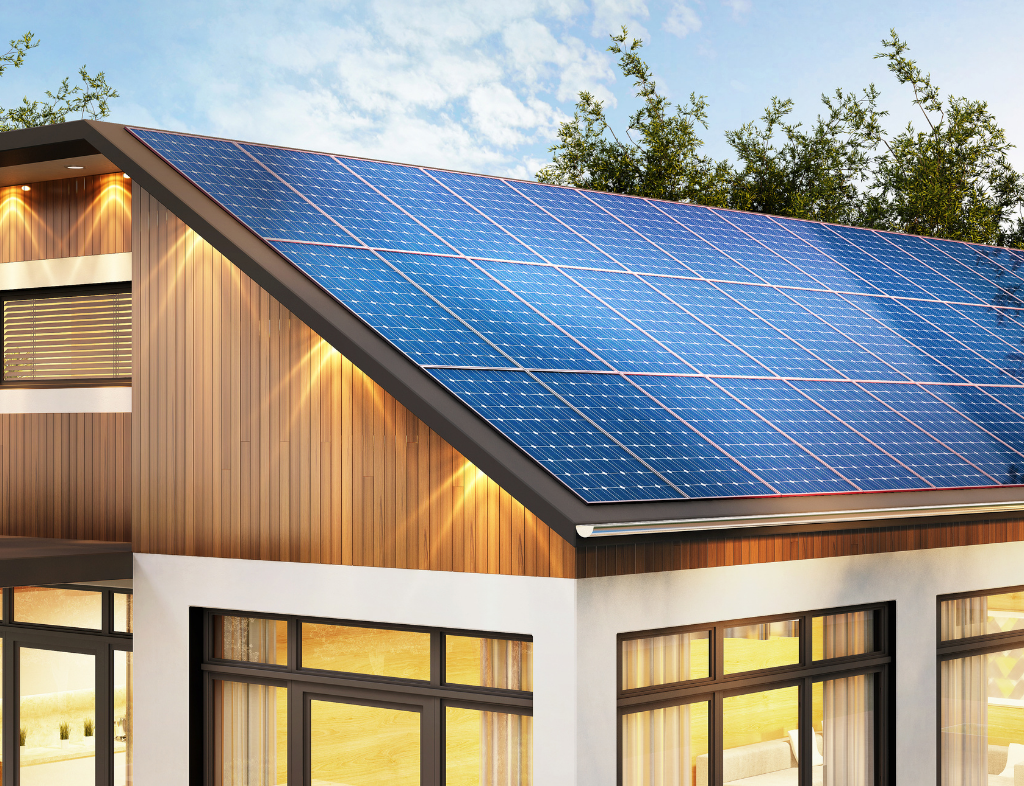
However, it is important to note that the dimensioning of the photovoltaic system should be sufficient to cover both the needs of the heat pump and other electrical consumers in the household. Careful planning and dimensioning of both systems is crucial to ensure optimum performance and efficiency. The photovoltaic system must be combined with an electricity storage unit so that the electricity from the photovoltaic system can also be used when the sun is not shining. Advice from renewable energy specialists can help you design and install the best system for your specific needs.
What is the difference between an air-to-water heat pump and other types of heat pumps?
The differences between an air-to-water heat pump and other types of heat pumps lie in the different heat sources and the components used for heat transfer. Here are some key differences:
Brine-to-water heat pump
- Heat source: Takes heat from the ground through geothermal probes or ground collectors that are embedded in the ground.
- Heat transfer: The extracted geothermal heat is transferred via a liquid mixture (brine) to the heat pump, which then heats the heating water.
- Advantages: Constant temperature of the geothermal heat sources, higher efficiency compared to air-to-water heat pumps at low outside temperatures.
Air-to-water heat pump
- Heat source: Uses the outside air as a heat source. A fan draws in the ambient air to generate heat.
- Heat transfer: Transfers the extracted heat to a water-glycol mixture that flows through a heat exchanger. This heated mixture is then used for heating purposes.
- Advantages: Simple installation, no complex earthworks, well suited for areas where geothermal probes or ground collectors are not possible.
Air-to-air heat pump
- Heat source: Also uses the outside air as a heat source, but the heat obtained is converted directly into air, which is then used to heat the interior.
- Heat transfer: The heat generated is heated in an indoor fan and conducted into the living space.
- Advantages: Easy installation, does not require underfloor heating or special radiators to transfer heat.
Each type of heat pump has advantages and disadvantages, depending on the specific conditions of the building, the region and the individual heating requirements. The choice of a suitable heat pump depends on various factors such as available space, installation costs, energy efficiency and environmental conditions. It is advisable to seek in-depth advice from professionals to determine the best option for your needs.