
Which type of heat pump is suitable for an apartment building?
Choosing the right type of heat pump for an apartment building depends on various factors:
Heat requirement of the building: The heat requirement of an apartment building depends on the size of the building, the number of residential units and the energy standard of the building.
Costs: The costs for a heat pump depend on the type of heat pump, the output of the heat pump and the installation.
Local conditions: Local conditions can influence the choice of heat pump. For example, in regions with cold winters, it makes more sense to choose a heat pump with a higher output.
The following heat pump types are generally suitable for apartment buildings
Air-to-water heat pumps: Air-to-water heat pumps are the most common type of heat pump for apartment buildings. They are relatively inexpensive and easy to install. However, they are also less efficient than brine-to-water heat pumps or water-to-water heat pumps.
Brine-to-water heat pumps: Brine-to-water heat pumps are more efficient than air-to-water heat pumps. However, they are also more expensive to purchase and install.
When choosing the right heat pump for an apartment building, it is important to consult a specialist. The specialist can take into account the local conditions and the building's heating requirements and recommend the optimum heat pump.
Here are some specific recommendations for choosing a heat pump for an apartment building:
For apartment buildings with low to medium heating requirements: air-to-water heat pumps are a good option.
For apartment buildings with medium to high heating requirements: brine-to-water heat pumps are a good option.
When selecting a heat pump for an apartment building, the funding options should also be taken into account. The German government offers various subsidy programs for the installation of heat pumps.
How does a brine-to-water heat pump work in an apartment building?
A brine-to-water heat pump in an apartment building uses brine as the heat source and water as the heat transfer medium. Here is a rough description of the operating principle.
.png)
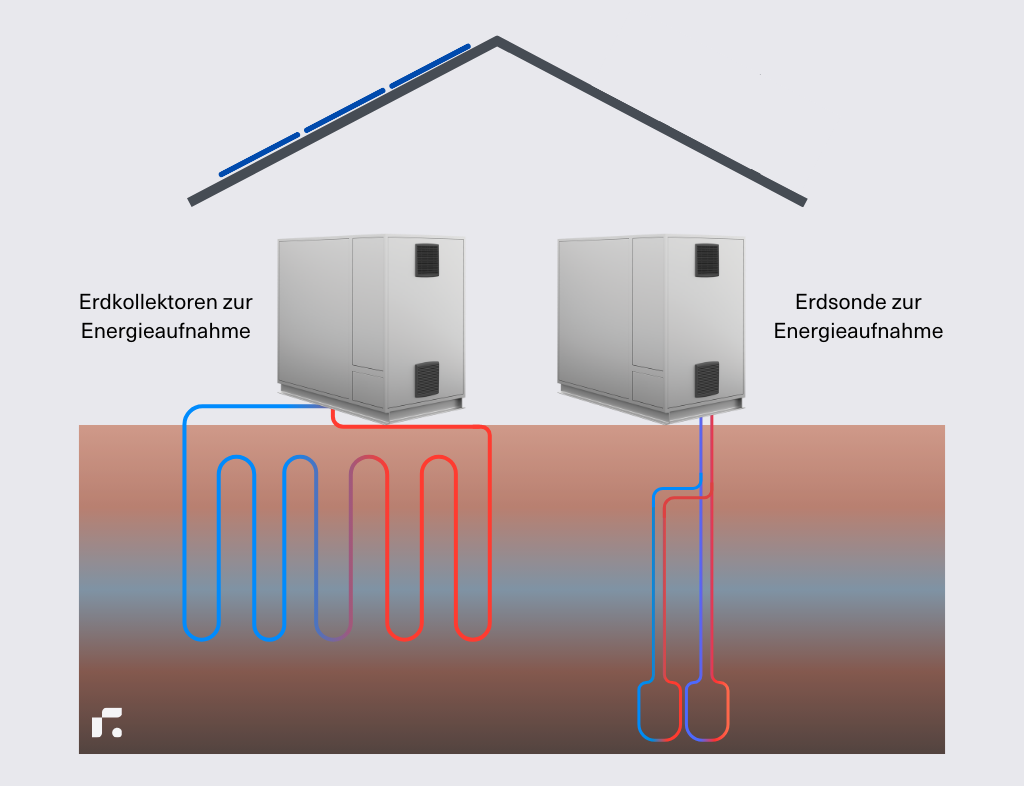
- Heat source: In the context of an apartment building, a system of geothermal probes or ground collectors is often used to tap into the brine as a heat source. Geothermal probes consist of pipes that are laid deep in the ground in boreholes. Ground collectors are pipe systems laid flat in the ground. A brine, typically a mixture of water and antifreeze, circulates through these pipes, absorbing natural heat energy from the ground.
- Heat absorption by the brine: The brine absorbs the natural heat from the ground. Due to the constant ground temperatures at different depths, the brine can absorb sufficient heat energy even in colder months.
- Heat pump process: The brine reaches a heat exchanger inside the heat pump. There, the brine transfers its stored heat to the refrigerant in the heat pump. The refrigerant evaporates due to its low boiling point and is pressurized.
- Compression process: The vaporized, pressurized state of the refrigerant increases the temperature of the gas. A compressor heats this gas further.
- Heat transfer to the water: The heated gas transfers its heat energy to another heat exchanger, which is connected to the water system of the apartment building. Here, the heat is transferred to the water, which is then used to heat the rooms or for hot water.
- Circulation and reuse: The cooled refrigerant flows back into the beginning of the circuit, where it evaporates again to repeat the process. The brine also continues to circulate through the geothermal probes or the ground collector to absorb heat again.
The benefits of a brine-to-water heat pump in an apartment building include efficiency in the use of geothermal energy, environmental friendliness through the use of renewable energy sources and the ability to supply several apartments via a central heating system. However, the performance and efficiency of the heat pump depends on various factors, including the quality of the building's insulation, the size of the system and the geographical location.
Brine-to-water heat pump: Heating with heat from geothermal energy in apartment buildings
A brine-to-water heat pump is a type of heat pump that uses the geothermal energy stored in the earth to generate heat for heating purposes. The principle is based on the exchange of heat between a brine (a mixture of water and antifreeze) and a water circuit in the building. Here is an explanation of how a brine-to-water heat pump works:
Brine circuit:
The system uses either geothermal probes or ground collectors in the ground. Geothermal probes are pipes that are laid deep in the ground in boreholes. Ground collectors are pipe systems that lie flat in the ground. The brine circulates through this pipe system and absorbs the natural heat energy from the ground. The ground temperature at a depth of a few meters remains relatively constant throughout the year.
Heat transfer:
The heat energy absorbed from the brine is conducted to a heat exchanger in the heat pump. There, the heat is transferred to a refrigerant, which evaporates at low temperatures.
Evaporation and compression process:
The vaporized refrigerant is compressed, which further increases its temperature. The compression process causes the pressure and temperature of the refrigerant to rise significantly.
Heat dissipation in the building:
The hot, compressed refrigerant releases its heat in another heat exchanger inside the building. This heat exchanger is in contact with a water circuit in the building, which transfers the heat to the building's heating system.
Recycling and reuse:
The cooled refrigerant flows back to the beginning of the circuit, where it evaporates again to repeat the process. At the same time, the cooled brine circulates back into the ground to absorb heat again.
The advantage of a brine-to-water heat pump lies in the use of a constant and renewable energy source (geothermal heat), resulting in an environmentally friendly and efficient way to heat a building. These systems can also be used to provide hot water and offer long-term energy savings, although installation and operation can initially be more costly compared to conventional heating systems.
What output does a heat pump need for an apartment building?
The output of a heat pump for an apartment building depends on various factors:
- Living space: The living space of the apartment building determines the basic heat requirement.
- Energy standard: The energy standard of the apartment building determines the additional heat requirement for ventilation and hot water preparation.
- Climatic conditions: The climatic conditions in the region determine the additional heat required for heating.
The output of a heat pump for an apartment building is specified in kilowatts (kW). The required output can be calculated using the following formula:
Output = living space * heat requirement per square meter
The heat requirement per square meter can vary depending on the energy standard of the building and the climatic conditions. For an apartment building with an energy standard of KfW 55, the heat requirement per square meter is around 60 to 70 watts.
Example:
An apartment building with a living space of 1,000 square meters and an energy standard of KfW 55 requires a heat pump with an output of around 60 to 70 kW.
The output of a heat pump should always be selected slightly higher than the actual heat requirement. This is necessary in order to be able to operate the heat pump efficiently even in extreme weather conditions.
Choosing the right output of a heat pump for an apartment building should always be carried out by a specialist. The specialist can take into account the individual circumstances of the building and recommend the optimum output.
Here are some specific recommendations for choosing the output of a heat pump for an apartment building:
- For apartment buildings with low heating requirements: A heat pump with an output of around 30 to 50 kW is sufficient.
- For apartment buildings with a medium heating requirement: A heat pump with an output of around 50 to 100 kW is sufficient.
- For apartment buildings with a high heating requirement: A heat pump with an output of around 100 to 200 kW is sufficient.
How much does a heat pump cost for an apartment building?
The cost of a heat pump for an apartment building depends on various factors:
- Type of heat pump: Air-to-water heat pumps are the cheapest type of heat pump. Brine-to-water heat pumps are more expensive.
- Heat pump output: The output of the heat pump determines the price.
- Installation: The installation of the heat pump is also subject to a charge.
The cost of a brine-to-water heat pump for an apartment building with an output of 60 kW is EUR 79,000.
The cost of installing a heat pump for an apartment building is usually between 10,000 and 20,000 euros. The cost of installation depends on the type of heat pump, the size of the building and the local conditions.
There are various funding opportunities for the installation of heat pumps. For example, the German government offers the "Federal Funding for Efficient Buildings (BEG)" funding program. This funding can significantly reduce the cost of a heat pump for an apartment building.
What costs can I expect when buying a heat pump for an apartment building?
The cost of purchasing and installing a brine-to-water heat pump can vary depending on various factors. Here are some of the main costs to consider when purchasing such a heat pump for an apartment building:
- Cost of the heat pump itself: The cost of the heat pump depends on the size of the system, the output and the efficiency of the model. Larger heat pumps with a higher output are generally more expensive. A high-quality, energy-efficient heat pump can cost more initially, but pay for itself in the long term through lower operating costs.
- Installation costs: The installation of a brine-to-water heat pump requires specialist knowledge. The cost of installation depends on the complexity of the system, the size of the apartment building, the type of ground conditions (for geothermal probes or ground collectors) and the location of the heat pump.
- Earthworks: If geothermal probes are used, the cost of drilling or digging the geothermal probes or laying ground collectors can account for a significant proportion of the total cost. These costs vary greatly depending on the geology and accessibility of the site.
- Additional equipment and adaptations: Adjustments may need to be made to the building's heating system in order to integrate the heat pump. This could include modifications to existing radiators, pipework or other heating components.
- Maintenance costs: Although heat pumps generally require little maintenance, maintenance costs should be considered over the lifetime of the system to ensure optimum performance and longevity.
The total cost of a brine-to-water heat pump for a single-family home at Regli is 89,000 euros.
How high are the operating costs for a large heat pump?
The operating costs for a large heat pump depend on various factors:
Heat requirement of the building
Season - outside temperature
The heat requirement of the building is the most important influencing factor. The greater the heat requirement, the higher the electricity consumption of the heat pump.
- The heat pump's SPF is also an important influencing factor. The SPF indicates the ratio between the heat output and the electrical energy supplied over a one-year period. In other words, the SPF indicates the efficiency of the heat pump over a longer period of time. The higher the SPF, the more efficient the heat pump and the lower the electricity consumption.
- The time of year and the outside temperature also have an influence on the heat pump's electricity consumption. Electricity consumption is higher in the cold season than in the warm season.
- Most of the operating costs are attributable to the electricity consumption of the heat pump.
- The remaining operating costs arise from the maintenance and inspection of the heat pump. The maintenance costs are usually around 1955 euros per year.
- The operating costs of a brine-to-water heat pump can be reduced even further by combining it with a photovoltaic system. If the photovoltaic system covers the heat pump's electricity requirements, there are no electricity costs.
Sample calculation of electricity consumption for brine-to-water heat pumps
The power consumption of a brine-to-water heat pump is calculated using a simple formula:
Power consumption = (heat output / JAZ) x operating hours
Sample calculation of electricity consumption
Assuming the brine-to-water heat pump (large heat pump) with an output of 80 kilowatts and an annual coefficient of performance (COP) of 4.94 runs for 1,800 hours per year. This corresponds to an electricity consumption of 29,150 kilowatt hours (kWh) per year.
Power consumption = (80 kW / 4.94) x 1,800 h = 29,150 kWh
To determine the annual electricity costs for the system, system owners can multiply the electricity consumption by the price per kilowatt hour (kWh):
Electricity costs of the heat pump = electricity consumption x costs per kWh
Electricity costs of the heat pump = 29,150 kWh x 0.28 Euro/kWh = 8,162 Euro
Heating cost billing for the heat pump in an apartment building
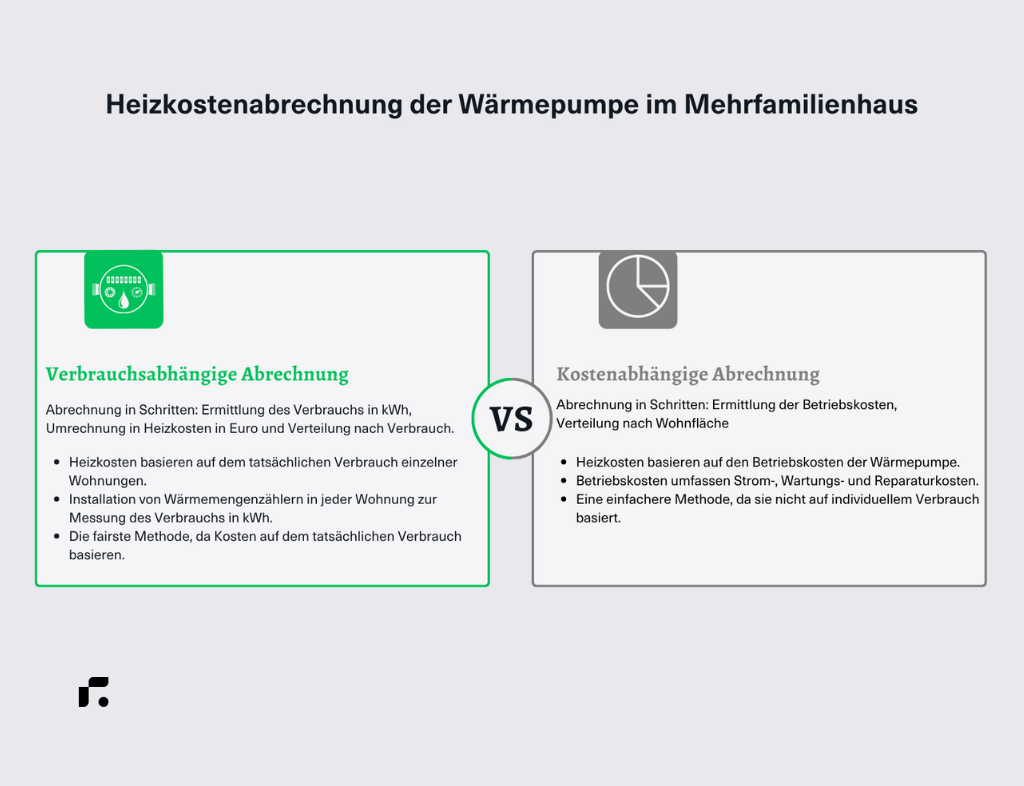
Two different methods can be used to bill heating costs for a heat pump in an apartment building:
- Consumption-based billing: With consumption-based billing, the heating costs are calculated based on the actual consumption of the individual residential units. Heat meters are installed in the individual apartments for this purpose.
- Cost-based billing: With cost-based billing, the heating costs are calculated on the basis of the costs for operating the heat pump. For this purpose, the operating costs of the heat pump are divided by the number of residential units.
Consumption-based billing
With consumption-based billing, the heating costs are calculated based on the actual consumption of the individual residential units. Heat meters are installed in the individual apartments for this purpose. The heat meters measure the heat consumption in kWh.
The heating costs are then billed in the following steps:
- Determination of heat consumption: The heat meters are read and the heat consumption is determined in kWh.
- Conversion of heat consumption into heating costs: The heat consumption is multiplied by the fuel price to determine the heating costs in euros.
- Distribution of heating costs: The heating costs are distributed based on the consumption of the individual residential units.
Consumption-based billing is the fairest method, as the heating costs are calculated based on the actual consumption of the individual residential units.
Cost-based billing
With cost-based billing, the heating costs are calculated on the basis of the costs for operating the heat pump. To do this, the operating costs of the heat pump are divided by the number of residential units.
The operating costs of the heat pump are made up of the following components:
- Electricity costs: Electricity costs are the biggest cost factor for a heat pump.
- Maintenance costs: The maintenance costs for a heat pump are relatively low.
- Repair costs: The repair costs for a heat pump can be high in individual cases.
The heating costs are then billed in the following steps:
- Determining the operating costs: The operating costs of the heat pump are determined.
- Distribution of operating costs: The operating costs are distributed on the basis of the living space of the individual residential units.
Cost-based billing is the simplest method, as the heating costs do not have to be calculated based on the consumption of the individual residential units.
Which method is better?
The question of which method is better depends on the individual circumstances. Consumption-based billing is the fairest method, as the heating costs are calculated based on the actual consumption of the individual residential units. Cost-based billing is the simplest method, as the heating costs do not have to be calculated based on the consumption of the individual residential units.
In practice, consumption-based billing is generally used.
Combination of a heat pump in an apartment building with an existing heating system
Combining a heat pump with an existing heating system in an apartment building is entirely possible and can be advantageous in certain situations. Here are some possible scenarios and methods of how such a combination could take place:
- Bivalent systems: A bivalent heating system uses both the heat pump and the existing heating system (e.g. gas or oil heating). The heat pump takes on the main heating load, but works in conjunction with the existing heating system to support the heat supply in extremely cold temperatures. This increases the efficiency and reliability of the heating system.
- Hybrid heating systems: Here, heat pumps and conventional heating systems are combined and intelligently controlled to switch between the systems as required. This is often done automatically, based on factors such as outside temperature, energy prices or other predefined parameters.
- Support from the heat pump: In this scenario, the heat pump can serve as support for the existing heating system, for example by providing hot water or heating certain areas of the apartment building.
- Gradual conversion: In some cases, the heat pump can serve as a gradual replacement for the existing heating system. Gradually, the heat pump is developed further and takes on more responsibility for heating the building, while the old system is reduced or eventually decommissioned.
When merging heat pumps with existing heating systems, it is important to check the compatibility of the systems and, if necessary, make adjustments or upgrades to ensure smooth operation. Integration may require specific control systems, additional heat exchangers or modifications to the existing heating system.
What are the advantages of a large heat pump compared to a gas or oil heating system in an apartment building?
There are several advantages of a heat pump over gas or oil heating systems for heating an apartment building:
- Environmentally friendly: Heat pumps use renewable energy sources such as air, water or geothermal energy to generate heat. Compared to gas or oil heating systems, they produce fewer greenhouse gas emissions and help to reduce carbon emissions, which reduces the environmental impact.
- Energy efficiency: Heat pumps can achieve high levels of efficiency. They use environmental heat and generate more heating power than they consume in electrical energy. Modern heat pumps can have a high coefficient of performance (COP), which means that they generate more heat energy than they consume in electrical energy.
- Lower running costs in the long term: Although the initial installation costs for heat pumps may be higher, they can have lower running costs in the long term. As they use less energy to generate heat, they can lead to significant savings in heating costs over the lifetime of the system.
- Independence from fossil fuels: Using a heat pump reduces dependence on fossil fuels such as gas or oil, the prices of which can be variable and influenced by external factors such as geopolitical events.
- Long-term investment and increase in value: Installing a heat pump can increase the value of an apartment building, as it is seen as an environmentally friendly and efficient heating solution. This could also make it more attractive to potential tenants or buyers.
However, it is important to note that the efficiency and profitability of a heat pump depends on various factors such as the building insulation, the chosen heat pump technology, the local climatic conditions and other individual circumstances. It is advisable to carry out a thorough analysis of the specific requirements and local conditions in order to choose the best heating solution for an apartment building.
What are the requirements for using a brine-to-water heat pump in existing buildings?
The use of a brine-to-water heat pump in an existing building requires certain prerequisites and considerations to ensure effective and successful integration. Here are some important aspects and requirements:
- Space required for geothermal probes or ground collectors: A brine-to-water heat pump requires geothermal probes (deep boreholes) or ground collectors (shallow pipe systems in the ground) to use geothermal energy as a heat source. The space required for these systems depends on the size of the building, the nature of the ground and the local conditions. It is important to have sufficient available space for the installation of these components.
- Suitable soil for geothermal probes or ground collectors: The soil must have certain thermal properties to enable efficient heat transfer. The soil type and moisture content as well as the soil temperature at depth are important factors for the suitability of the site.
- Building insulation: Effective building insulation is important to minimize heat loss and maximize the efficiency of the heat pump. Well-insulated buildings require less heating energy, which can improve the performance of the heat pump.
- Heating system compatibility: The existing heating components in the building must be compatible with the brine-to-water heat pump. Adjustments or additions to the existing heating system may be necessary in order to successfully integrate the heat pump.
- Power supply and electrical requirements: The heat pump requires electricity to operate. It is important to ensure that the electrical supply in the building is sufficient to supply the heat pump with electricity.
- Professional advice and planning: It is advisable to obtain professional energy advice and planning to assess the suitability of the building for the use of a brine-to-water heat pump. A specialist can analyze the location, check the ground conditions, determine the size of the system and recommend a tailor-made solution for the existing building.
The requirements for the use of a brine-to-water heat pump can vary depending on the location, building structure and individual circumstances. Careful investigation and planning by qualified specialists is crucial to ensure that all the necessary requirements are met before a brine-to-water heat pump is installed in an existing building.
Can I also install a brine-to-water heat pump in an old building?
A brine-to-water heat pump can also be installed in old buildings. However, the requirements for this are slightly different to those for new builds.
Requirements for a brine-to-water heat pump in an old building:
- Tightness of the building: The building must be tight so that heat is not lost through leaks. A leaky building leads to higher electricity consumption by the heat pump.
- Suitable radiators: The radiators must be suitable for operation with a heat pump. The radiators should be large enough to absorb the heat from the heat pump.
- Underfloor heating: Underfloor heating is ideal for operating a heat pump. Underfloor heating can be operated with low flow temperatures, which can be generated by a heat pump.
Additional measures in the old building:
- Insulation: The insulation of the building should be improved in order to reduce energy requirements.
- Modernization of radiators: The radiators can be replaced by modern radiators with lower flow temperatures.
- Hydraulic balancing: Hydraulic balancing ensures that the heat in the building is distributed evenly.
How long does it take to install a heat pump in an apartment building?
The duration of the installation of a heat pump in an apartment building depends on various factors and can vary. Typically, the installation of a heat pump takes from several days to several weeks, depending on the following aspects:
Type of heat pump: The type of heat pump (e.g. air-to-water, brine-to-water) can affect the installation time. More complex systems such as brine-to-water heat pumps, which require geothermal probes or ground collectors, can take longer due to drilling or excavation work.
Size of the apartment building: The size of the building and the number of apartments can affect the installation time. Larger apartment buildings may take longer to install as more components need to be installed and more work may be required at different locations in the building.
Preliminary work and preparations: Before the actual installation, preparatory work may need to be carried out, such as preparing the site for the placement of geothermal probes or ground collectors, making changes or adjustments to the heating system and, if necessary, improving the building's insulation.
Complexity of installation: The installation of a heat pump requires specialized expertise and the cooperation of various trades such as plumbers, electricians and possibly contractors. The complexity of the installation and the coordination of this work can affect the installation time.
Weather conditions: Weather conditions can also affect the installation time. Extreme weather conditions such as heavy rainfall, frost or snow can delay or impair installation work, especially if groundwork has to be carried out outdoors.
It is important to note that these are general factors and the actual installation time may vary depending on the specific circumstances of the apartment building and the heat pump solution chosen. Professionals or installers can often provide a better estimate of the installation time for a specific project after a thorough inspection and planning.
What are the particular challenges of heat pumps in apartment buildings?
Installing heat pumps in apartment buildings can present specific challenges that go beyond the requirements of single-family installations. Some of these challenges include:
- Space requirements and accessibility: Apartment buildings often have limited space for the installation of heat pumps and associated components such as geothermal probes or ground collectors. Access to these locations can be difficult, which can make installation more difficult.
- Coordination and collaboration: Installing a heat pump requires the coordination of various trades such as plumbers, electricians and possibly contractors. Effective collaboration between these professionals is crucial to ensure that the installation goes smoothly.
- Adaptation to existing systems: In apartment buildings, there are often already existing heating systems. The integration of a new heat pump may require adjustments or additions to these systems, which can pose additional challenges.
- Individual requirements of residents: In apartment buildings, different residents may have different heating requirements or heating habits. The planning and configuration of the heat pump installation should take these individual requirements into account.
- Communication and resident involvement: Installing a heat pump in an apartment building requires appropriate communication with residents to inform them about the installation process and minimize any potential inconvenience.
- Permits and legal aspects: For multi-family buildings, specific permits and legal aspects, such as noise pollution regulations or building permits, can present additional challenges that need to be taken into account.
- Operational management and maintenance: After installation, the operational management and maintenance of a heat pump in an apartment building requires a structured approach to ensure efficient operation and to identify and rectify problems quickly.
Overcoming these challenges requires thorough planning, coordination and cooperation between professionals, residents and other parties involved to ensure that the heat pump installation in the apartment building is carried out successfully and efficiently.
Advantages and disadvantages of a large heat pump
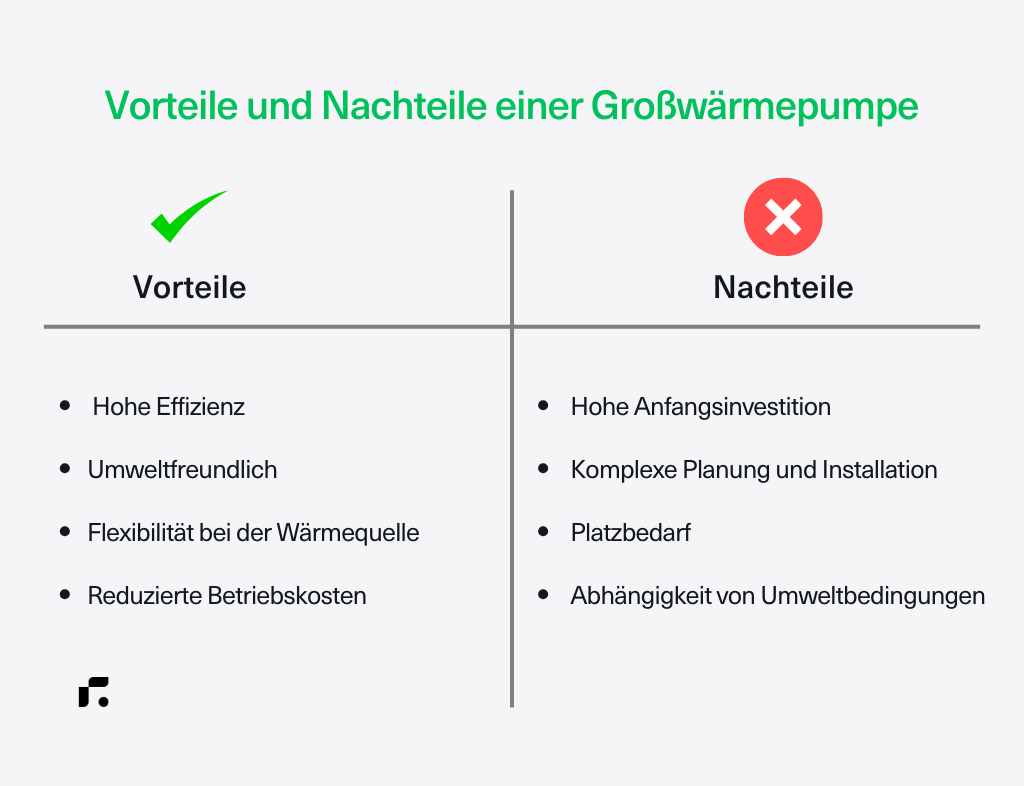
Large heat pumps have various advantages and disadvantages, which can vary depending on the area of application and specific requirements. Here are some general advantages and disadvantages of large heat pumps:
Advantages
- High efficiency: Large heat pumps can have high energy efficiency, especially when applied on a large scale. They can extract significant amounts of thermal energy from renewable sources such as air, water or geothermal energy and convert it into heating, hot water or other processes.
- Environmentally friendly: They use renewable energy sources and can reduce CO2 emissions compared to conventional heating systems, resulting in a lower environmental impact.
- Flexibility in the heat source: Large heat pumps can use different heat sources, including air, water or geothermal energy, depending on the conditions of the site and the specific requirements of the project.
- Reduced operating costs: Thanks to the use of renewable energy and high efficiency, large heat pumps can have lower operating costs in the long term compared to conventional heating systems.
Disadvantages
- High initial investment: The purchase and installation costs for large heat pumps can be higher than for conventional heating systems. This can lead to a larger initial investment.
- Complex installation and planning: The installation of a large heat pump requires careful planning and can be complex, especially for larger systems. The coordination of various trades and specialists is required.
- Space requirements: Large heat pumps often require more space for installation, especially for systems that require geothermal probes or ground collectors.
- Dependence on environmental conditions: The efficiency of large heat pumps can depend on environmental factors such as outdoor temperature, humidity and other climatic conditions, which can affect their performance.
Choosing a large-scale heat pump requires careful consideration of the specific requirements, costs and benefits for the project or building in question. In many cases, large heat pumps can provide a cost-effective and environmentally friendly heating solution, especially when applied on a large scale.
What does the seasonal performance factor mean for the heat pump in an apartment building?
The annual coefficient of performance (COP) is an important parameter for the efficiency of a heat pump. It indicates how much heat energy a heat pump generates over a period of one year in relation to the electrical energy supplied. In the context of an apartment building, this means that the seasonal performance factor of a heat pump indicates how efficiently it works throughout the year to generate heat for heating or hot water.
A high seasonal performance factor is an indicator of the energy efficiency of a heat pump and can help to reduce operating costs by generating more heating output per unit of energy consumed. Before purchasing a heat pump, it is advisable to consider the SPF and select a heat pump that is able to maintain a high efficiency under the specific conditions of the apartment building.
Funding for a heat pump heating system in an apartment building
How much is the subsidy for a brine-to-water heat pump for an apartment building
Funding for large heat pumps for multi-family homes can vary depending on the country, region and program. In many countries, there are government subsidy programs or incentives to support the use of energy-efficient heating systems such as large heat pumps. These subsidies can take various forms, including grants, interest rate reductions for loans, tax relief or similar financial incentives.
The exact funding amounts for large heat pumps in apartment buildings depend on various factors:
- Regional funding programs: Each region or federal state may have its own funding programs and guidelines. The amount of funding can therefore vary depending on the location.
- Fulfillment of certain criteria: Funding may be linked to conditions that must be met, such as the heat pump meeting certain efficiency standards, the use of renewable energy sources or other technical requirements.
- Building size and efficiency: The amount of the subsidy can also depend on the size of the apartment building and the energy efficiency of the heat pump system.
- Application procedures and deadlines: It is important to note the application procedures and deadlines for applying for funding, as these can vary from program to program.
How do I apply for funding for a large heat pump?
The exact steps and procedure for applying for funding for a large heat pump may vary depending on the country, region or funding program. In general, however, the following steps may be helpful:
- Research and information: Find out about the available subsidy programs for large heat pumps in your country or region. Check the funding conditions, criteria and the amount of funding.
- Compliance with the requirements: Ensure that your project or multifamily building meets the requirements of the grant program. This could include compliance with certain efficiency standards, the use of renewable energy or other technical requirements.
- Preparation of the required documents: Gather all the necessary documents and records in accordance with the requirements of the funding program. These may include technical specifications of the heat pump, energy performance certificates for the building, cost estimates, application forms and other relevant documents.
- Application: Fill out the funding application completely and correctly according to the instructions of the funding program. Ensure that all required information and documents are submitted.
- Submission of the application: Send the application and all required documents to the responsible body or authority in accordance with the requirements of the funding program. Pay attention to any deadlines for submitting the application.
- Review and approval: The applications submitted are reviewed by the funding body. This process can take different lengths of time depending on the program. After a successful review, a decision is made on the funding.
- Implementation and documentation: Once you have received the funding approval, you can install the large heat pump accordingly. Observe any specified requirements for documentation and reporting on the measures carried out.
We support you in applying for your subsidy and provide you with all the necessary information on BAFA. Take advantage of our comprehensive all-in service for your BAFA or KFW funding application, provided in cooperation with our partner 42watt.
.png)
Large heat pumps - all products for apartment buildings and offices at a glance
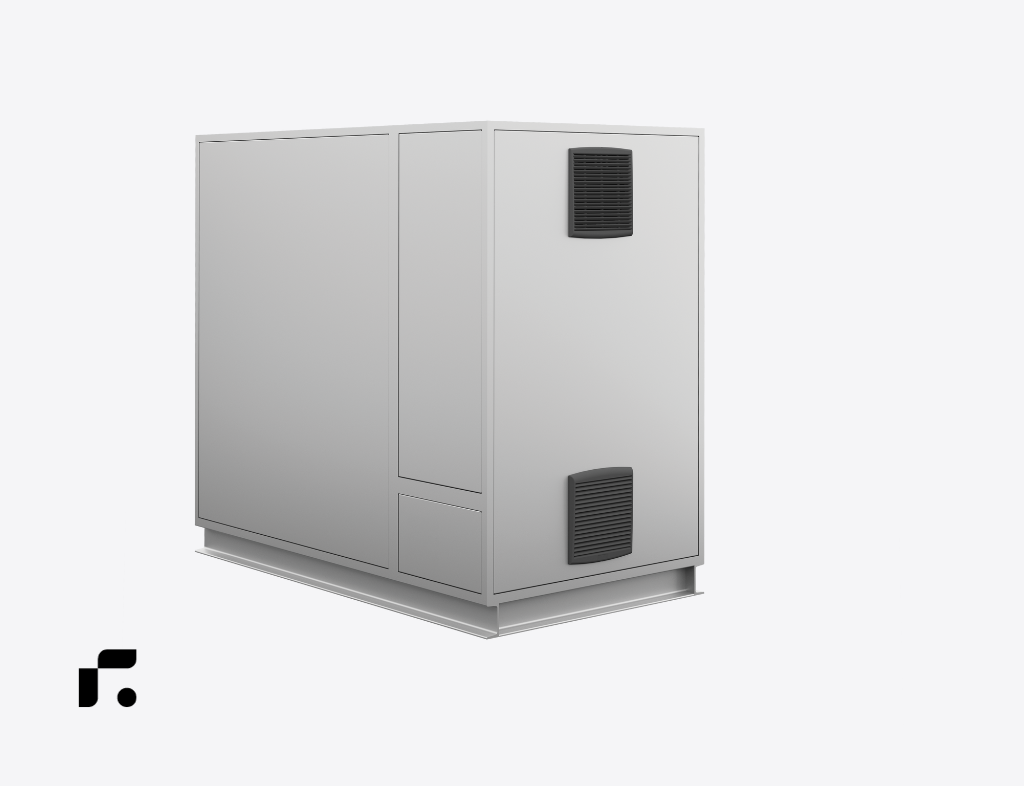
The TeraAqua from Regli is a highly developed large brine/water heat pump that is suitable for use in apartment buildings, commercial properties and office buildings. It uses geothermal energy to efficiently generate heating and domestic hot water and offers outputs of between 80 and 1,100 kW. Particularly noteworthy is its long service life of over 25 years, the use of environmentally friendly propane as a refrigerant and the integration of advanced RCL software, which ensures optimum performance and efficiency. The TeraAqua is available in various sizes to meet different requirements.
How can a large heat pump be financed?
There are various ways to finance a large heat pump for an apartment building:
- Equity: Financing via equity is one way of covering the costs of purchasing and installing the large heat pump. The apartment building or the owners can provide funds from their own savings or other liquid assets.
- Credits and loans: Banks and financial institutions often offer special credit or loan programs for financing energy-efficient heating systems such as large heat pumps. These may offer low interest rates or other financial incentives. It is advisable to compare the various offers and choose the best financing option for your individual needs.
- Leasing or installment plan: With leasing or installment plan models, the customer pays regular installments for the use of the heat pump instead of buying it outright. At the end of the contract, certain agreements can be made, such as the purchase of the system at a predetermined price.
- Subsidies and grants: Government funding programs, regional grants or other incentive schemes can reduce the purchase cost of a large heat pump. These subsidies can make financing easier and reduce the overall cost of the project.
- Contracting models: Energy contracting is a model in which an external provider assumes the investment costs for the heat pump, installs it and operates it. The operator then sells the heat generated to the apartment building. These models can be a way of shifting investment costs and reducing energy costs.
The optimal financing option depends on various factors:
- Costs: The costs for installing a large heat pump can be very high.
- Equity: The amount of equity determines how much debt capital is required.
- Funding opportunities: The amount of funding available can reduce the cost of financing.
- Interest: Interest on loans can increase the cost of financing.
We recommend our exclusive financing option: With an estimated installment payment of only €175 per month over a period of 120 months, an effective annual interest rate of 7.99% and a fixed borrowing rate of 7.71% (50% block rate), you can benefit from this attractive financing option. In addition, a down payment of 40%, which is refunded as a BAFA subsidy after commissioning, provides additional financial relief [financing example, depending on credit rating].
The most frequently asked questions about large heat pumps
Is a heat pump worthwhile in an apartment building?
The viability of a heat pump in an apartment building depends on several factors, including the specific conditions of the building, the heat pump solution chosen, current heating costs, available subsidies and other financial considerations. Here are some considerations for the profitability of a heat pump in an apartment building:
- Energy costs: A heat pump can have lower operating costs in the long term as it uses renewable energy sources. However, the savings depend on the current heating costs, the building's energy consumption and local energy prices.
- Investment costs: The purchase and installation costs of a heat pump can be higher compared to conventional heating systems. Profitability depends on how long it takes for the operating cost savings to offset the higher investment costs.
- Subsidies: The availability of subsidies and grants can increase the profitability of a heat pump, as they can reduce the initial investment costs.
- Efficiency of the heat pump: The efficiency of a heat pump, measured using the annual coefficient of performance (COP), influences the operating costs. Higher efficiency means lower operating costs.
- Service life and maintenance costs: The service life and maintenance costs of the heat pump influence the long-term total costs. A well-maintained heat pump can maintain its efficiency over a longer period of time.
- Specific building requirements: The suitability of a heat pump for the specific apartment building, the existing heating infrastructure and other structural features are also important factors.
Which radiators for a brine-to-water heat pump in apartment buildings?
For a brine-to-water heat pump installed in an apartment building, different types of radiators can be used to efficiently distribute the heat generated throughout the building. Which radiators are most suitable depends on various factors, including the size of the apartments, the heating load of the building, the flow temperature of the heat pump and the individual requirements of the residents. Here are some common options:
- Low-temperature radiators: As brine-to-water heat pumps typically have lower flow temperatures than conventional heating systems, radiators with good performance at low temperatures are recommended. These include underfloor radiators that provide a large heat output and work well with low flow temperatures.
- Surface heating: Underfloor heating, wall heating or ceiling heating are efficient systems for distributing heat evenly throughout a room. They work well with low flow temperatures and offer a high level of comfort for residents.
- Convectors: High-efficiency convectors, which are suitable for low flow temperatures, can also be an option. They can be installed in rooms where underfloor or wall heating is not possible.
- Thermal component activation: Thermal component activation can be an interesting option for new buildings or larger renovation projects. This involves using the mass of building components such as ceilings, walls or floors as a heating surface, which leads to even heat distribution.
- Underfloor heating: Underfloor heating is a popular choice for brine-to-water heat pumps. It distributes the heat evenly in the room and uses the floor as a heating surface, which results in a pleasant room climate and harmonizes well with the lower flow temperatures of the heat pump.
The choice of radiators depends on the efficiency of the heat pump, the desired heating output and the comfort requirements of the residents. When planning and selecting radiators, it is advisable to consider the recommendations of specialists, such as heating engineers or energy consultants, in order to find the optimum heating solution for the apartment building.
Supplement large heat pump with photovoltaic system
Supplementing a large heat pump with a photovoltaic system can be a sensible and sustainable measure to improve the energy efficiency of the system and maximize self-consumption of renewable energy. Here are some important aspects that should be considered:
- Sizing the photovoltaic system: The photovoltaic system should be sized according to the size and energy requirements of the large heat pump. It is important to take into account the required output of the heat pump and the building's own electricity consumption.
- Energy optimization and self-consumption: The solar power generated can be used to support the electrical energy supply of the large heat pump. This increases the proportion of self-generated renewable electricity and potentially reduces operating costs.
- Energy management system: An intelligent energy management system can help to make optimum use of the solar energy generated. It can balance the power requirements of the heat pump with the solar power generated and maximize self-consumption.
- Storage solutions: The combination of photovoltaic system and large heat pump can be supported by energy storage systems such as batteries. Such storage systems enable the temporary storage of surplus solar power for later consumption, which can increase self-sufficiency.
- Funding opportunities: In some regions, there are subsidy programs or incentives for the installation of photovoltaic systems that promote the use of renewable energies. It may be worth looking for financial support to reduce the investment costs.
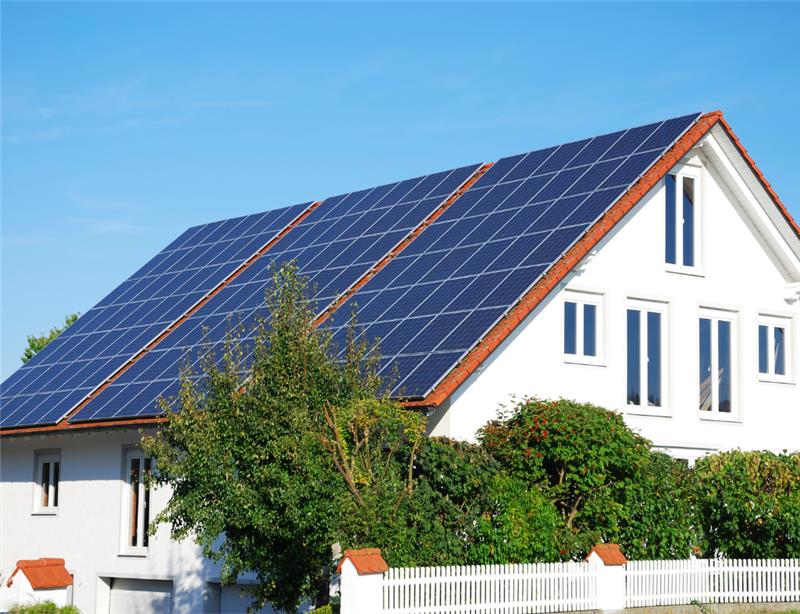
Combining a large heat pump with a photovoltaic system is an effective way to increase energy efficiency and increase the proportion of renewable energy in the energy mix of an apartment building. Thorough planning and expert advice can help to achieve the optimum integration of both systems and achieve the best possible results in terms of energy savings and sustainability.
Conclusion: Is a heat pump the best heating system for apartment buildings?
Heat pumps are extremely attractive due to their outstanding energy efficiency and the use of renewable energy sources such as air, water or geothermal energy. Their environmental friendliness and ability to generate heat efficiently make them a promising heating option. Nevertheless, there is no single "best" heating solution for all scenarios. Rather, various factors influence the choice of heating for an apartment building.
Energy efficiency is a key factor when evaluating heat pumps. Their reputation as highly efficient heating systems underlines the potential savings in operating costs and the reduction in environmental impact.
The investment costs should also be taken into account. Although heat pumps may initially cost more than conventional heating systems, their profitability depends on how quickly the operating cost savings offset the initial investment.
Building characteristics such as construction, insulation and size have a direct influence on the efficiency and performance of a heat pump. Adaptation to these specific conditions is therefore essential.
The integration of a heat pump into existing heating systems may require adjustments or additions, which can mean additional costs. The existing heating infrastructure therefore plays an important role in the decision-making process.
Regional factors such as the availability of subsidies and local climatic conditions should also be taken into consideration. These can significantly influence the attractiveness of a heat pump.
A thorough analysis and consideration of the advantages and disadvantages of different heating systems is therefore recommended in order to find the optimum solution for the apartment building. Heat pumps can be a first-class choice in many cases due to their efficiency and environmental friendliness.

.png)